.svg)
.svg)
Stair height explained - what is the maximum, minimum and ideal, and what do the norms say?
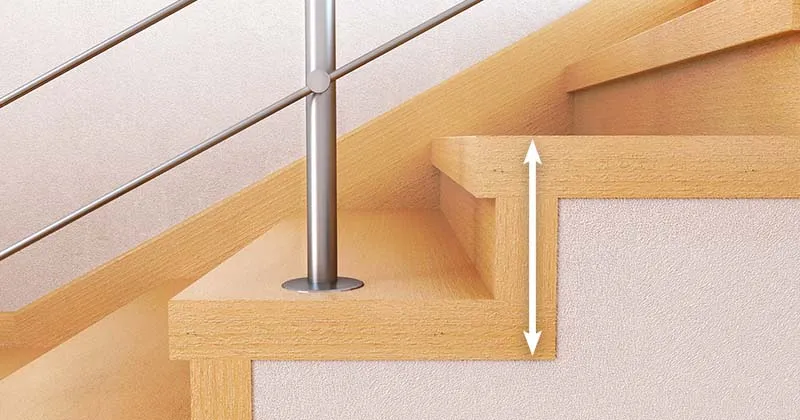
The correct height of the step is the basic parameter for safe and comfortable stairs. If you are planning to build a new staircase or renovate an existing one, it is essential to know exactly what is the maximum height of the step, the minimum height of the step and The ideal height of the step according to the applicable standards. In this article we will give you complete information about what they say standards on the height of the stairs and how to design a staircase that will be not only safe, but also ergonomic and comfortable for everyday use. A properly designed staircase contributes significantly to the comfort of living and Reduces the risk of domestic injuries.
Step height according to ČSN 73 4130
In the Czech Republic it is stair height norm laid down by technical regulation CSN 73 4130 Stairs and sloping ramps - Basic requirements. This standard defines exactly what the height of the stairs should be for different types of buildings and uses. Compliance with these normative requirements is not only a matter of formal compliance with the regulations, but above all an essential prerequisite for the creation of safe and user-friendly staircasethat will serve for many years without problems.
Maximum height of the step according to the standard
The standard clearly establishes what it is maximum height of the step for different types of stairs:
- The main staircase in residential buildings: maximum 180mm
- Auxiliary and technical staircases: maximum 200mm
- Preschool facilities for children: maximum 150mm
- Schools: maximum 160mm
- Outdoor Staircase: the recommended maximum height is 150mm
Exceeding these values is not only a violation of the norm, but first of all creates dangerous conditions for users. The height of the step 20 cm (200 mm) is at the very limit of the permissible values and is suitable only for auxiliary or technical staircases, not for the main staircase in residential premises. This is how high stairs represent increased risk of tripping, especially for children or the elderly, and with regular use may cause excessive load on the joints.
In extreme cases, we may also encounter a question about the height of the step of 25 cm. Such a height already significantly exceeds the norms and in no case should it be used for ordinary staircases, since it represents a significant security risk. Stairs with such a height require an unnaturally large step and can lead to frequent falls with serious consequences.
Minimum height of the step according to the standard
Standard ČSN 73 4130 also defines minimum height of the step for different types of stairs:
- Ordinary staircases in residential buildings: at least 150mm
- Staircases in kindergartens: at least 120mm
- Outdoor Staircase: at least 120mm
Too low stairs are not ergonomically convenient because they interfere natural rhythm of walking and they can, paradoxically, cause tripping. The human stride is naturally set to a certain combination of height and width. When the stairs are too low, it forces us to take unnaturally short steps, which can be tiring and uncomfortable when taking longer stairs. At the same time, a staircase with very low steps takes up more space, since it requires more steps to overcome the same height difference.
Ideal step height for different types of buildings
Ideal height of the step differ according to the type of building and the purpose of the staircase:
- Family houses: 150-180 mm (optimally around 170mm)
- Apartment buildings: 150-170 mm
- Schools and educational institutions: 130-160 mm
- Facilities for the elderly: 130-150 mm
- Outdoor Staircase: 120-150 mm
Optimal step height for ordinary residential buildings it is approximately 170mm. This value best corresponds to the natural stride of the average adult and ensures a balance between safety and efficiency of movement. At this height, walking up the stairs is smooth and natural, without excessive effort. In addition, the staircase designed in this way allows efficient use of space and provides long-term comfort during daily use.
Relationship between height and width of the step
For securing Comfortable movement in the stairwell there is an important relationship between The height of the step and step width (tread). The higher the step, the wider the step should be to make walking comfortable and safe. This relationship is not accidental — it stems from biomechanics of human gait and Ergonomic principlesthat ensure optimal movement during ascent and descent.
Blondel's formula
The best known rule for determining the relationship between the height and width of a step is Blondel's formula: 2h + b = 630mm (where h is the height of the step and b is the width of the step)
This formula is based on the natural human step and ensures that the staircase is ergonomically compliant. For example, with a step height of 170 mm, the step width should be approximately 290 mm. Compliance with this formula contributes significantly to Convenient and safe use Staircase because it respects the natural rhythm of human gait and minimizes the effort in both ascent and descent.
Why follow the recommended step height
There are several fundamental reasons why it is important to adhere to the standard height of the step established by the standards:
Security
- Inappropriate step height is one of the main causes falls in the stairwell.
- Maximum height of stairs - the norm exists precisely for the purpose of preventing injuries.
- For the elderly or children, a step that is too high or low can be very dangerous.
Statistics show that falls on staircases are among The most common domestic injuries and can have serious consequences, ranging from minor injuries to fractures or worse injuries. Therefore, the correct height of the step is essential to minimize these risks, especially in households where children or the elderly live, who are more prone to falls.
Convenience in use
- Optimal step height minimizes physical exertion at the exit.
- A properly designed staircase allows natural rhythm of walking.
- Too high stairs cause excessive fatigue knees and hips.
A staircase that respects Ergonomic principles and normalized values of the height of the step, significantly improves comfort during daily use. Users do not need to consciously adjust their step to non-standard dimensions, which reduces cognitive load and allows smooth and natural movement.
Legal and Building Regulations
- Failure to comply with standards can lead to problems in housewarming.
- In the event of an accident on the staircase that does not comply with the standards, there is a risk of legal complications.
- Building authorities require compliance with the standard CSN 73 4130.
In addition to safety and ergonomic aspects, compliance with the standard values of the step height is also important from a legal point of view. A non-compliant staircase can complicate housebuilding procedures or, in the event of an accident, lead to problems with insurance performance or legal liability of the property owner.
The most common mistakes in the design of the height of the stairs
When designing stairs, we commonly encounter several typical mistakes related to the height of stairs:
1. Different height of individual stages
All stairs in one stair arm must have exactly the same height. Even a minimal difference between the stages can cause tripping and falling. The human brain creates a motor pattern when walking up stairs and expects the same height for each step. When this pattern is disturbed, tripping occurs, which can have serious consequences. Especially dangerous is the last or first step with a different height, since in these places there is a transition between different types of surface, and a change in height is the least expected here.
2. Exceeding the maximum height
Trying to save space often leads to the design of stairs that are too high. Step height 20 cm is already on the edge of the norm and for normal use is not optimal. Step height 25 cm already significantly exceeds the norm and creates a dangerous staircase. High stairs are challenging to climb, require greater muscle effort and increase the risk of losing balance. Especially for the elderly or people with mobility difficulties, such high stairs can be a practically insurmountable obstacle.
3. Too low stairs
The design of stairs with a height of less than 150 mm can lead to inefficient use of space and uncomfortable movement, when the user has to overcome more degrees than necessary. Too low stairs disrupt the natural rhythm of walking, as they force unnaturally short steps. Paradoxically, they can thus increase the risk of tripping, especially when descending, when people often underestimate low stairs and pay less attention to them.
4. Ignoring the relationship between height and width
The height of the step and the width of the scale (step) must be in Correct ratio. Too high stairs with a small scale width are extremely dangerous. This ratio is especially important when descending, when it is necessary that the foot has sufficient support on the step. If the scale is too narrow in combination with a high staircase, there is a risk of slipping or tumbling forward. The correct relationship between the height and width of the step ensures stability when walking and minimizes the risk of falling. For an ordinary staircase, the step width should not be less than 250 mm, ideally then 280-300 mm with a standard height of about 170 mm.
Different types of stairs and their optimal height
Interior staircases in single-family homes
For interior staircases in family homes, the ideal step height is between 150-180 mm, with a value of around 170mm is considered optimal in terms of comfort and safety. This height best corresponds to the natural step of an ordinary user. Family houses are inhabited by different generations with different physical abilities, so it is important to choose a universal step height that will suit both children and adults, as well as seniors.
Outdoor Staircase
For outdoor staircases, it is recommended to choose a lower step height — ideally between 120-150 mm. The lower height compensates for the potential risks associated with the outdoors (rain, snow, ice), and also respects the fact that outdoors we typically walk at a different pace than inside buildings. Outdoor staircases are often exposed to adverse weather conditions, which can greatly affect their safety.
Staircases for the elderly and people with reduced mobility
In buildings designed for the elderly or people with reduced mobility, the height of the step should be at the lower limit of the recommended range - ideally 130-150 mm. Lower stairs reduce the effort on the ascent and minimize the risk of falling. Older people often have impaired mobility, stability and strength in their legs, which can make it difficult for them to use stairs.
Spiral and spindle staircases
For spiral staircases, special attention should be paid to the height of the step. The maximum height of the step should not exceed 180 mm, whereas due to the more complex geometry of these stairs, it is advisable to choose values around 160-170 mm. Spiral staircases have a specific design, where the width of the step is not constant along the entire length — it is narrower at the inner edge than at the outer one.
Practical solutions to ensure the correct height of the step
New staircase construction
In new construction, the best solution is to use modern systems that ensure the exact observance of the optimal height of the step. CEMVIN STEP System offers the following advantages:
- Precise compliance with the ideal step height thanks to tailor-made production
- Quick and dry assembly in one day
- Instant Errands after the installation is complete
- Significantly lower weight than for concrete staircases
- High load capacity up to 3.5 kN/m²
This innovative system uses Cement Fiberboardwhich combine high strength with low weight. Each element of the staircase is manufactured with millimeter accuracy, which ensures a uniform height of all steps and maximum safety. Thanks dry mounting without the need to wait for the concrete to dry, the entire construction process is significantly faster and cleaner than with traditional methods.
Renovation of an existing staircase
When renovating, it is often a challenge to adjust the height of the stairs to meet current standards and ergonomic requirements. There are two main approaches:
1. Professional solution with expert assembly
TOPSTEP PROFI It offers a comprehensive solution for renovation of stairs with the possibility of optimizing the height of the step:
- Professional focus and solution design
- Production of custom-made tiles according to measured values
- Professional assemblywhich guarantees compliance with all standard parameters
This solution is ideal for cases where the existing staircase is in good structural condition, but has an unsuitable height or width of steps. Experienced technicians will accurately measure the existing staircase and design the optimal method of cladding, which will take into account the current state and the requirements for the resulting height and width of the steps. Thanks wide range of decors and profiles in addition, it is possible to match the appearance of the staircase with the interior.
2. Solutions for self-assembly
For those who want to renovate the staircase with their own hands, it is available TOPSTEP FLEX system:
- Simple system per cladding of existing stairs
- The possibility of minor adjustments to the height of the step using leveling pads
- Quick installation in one day
This system is a simple and affordable way to trim existing stairs and improve their parameters. TOPSTEP FLEX is kits for self-assemblythat does not require specialized tools or expertise. It is an ideal choice for smaller or simpler staircases, where there is no need to deal with complex technical details.
How to Ensure the Optimal Step Height for Your Staircase
The correct height of the step is a key parameter for a safe and comfortable staircase. When planning construction or renovation, it is important to:
- Comply with the norm CSN 73 4130which determines the minimum and maximum height of the step
- Elect The ideal height of the stairs taking into account the type of building and user (optimally around 170 mm for conventional residential buildings)
- Ensure uniform height of all stages within one stair arm
- Respect the ergonomic relationship between The height and width of the stairs
- Entrust design and implementation to specialistswho have experience and technical knowledge
Remember that investing in a properly designed Stair system will return to you in the form of everyday comfort, safety and long life. Company TOPSTEP with more than 20 years of experience in the field, it will help you to realize a staircase that will meet all the standard requirements for the height of the step and at the same time will be aesthetically in harmony with your interior. A quality staircase with an optimal step height is not only safe and comfortable, but also increases the value of your property and contributes to the overall quality of living.

.svg)
.svg)
.svg)
.svg)